Affiliate disclosure: This guide currently uses ordinary provider and source links without affiliate tracking. Gofarly may earn a commission from qualifying purchases through affiliate links elsewhere on this site. As an Amazon Associate I earn from qualifying purchases. Affiliate availability does not determine our picks. Full disclosure.
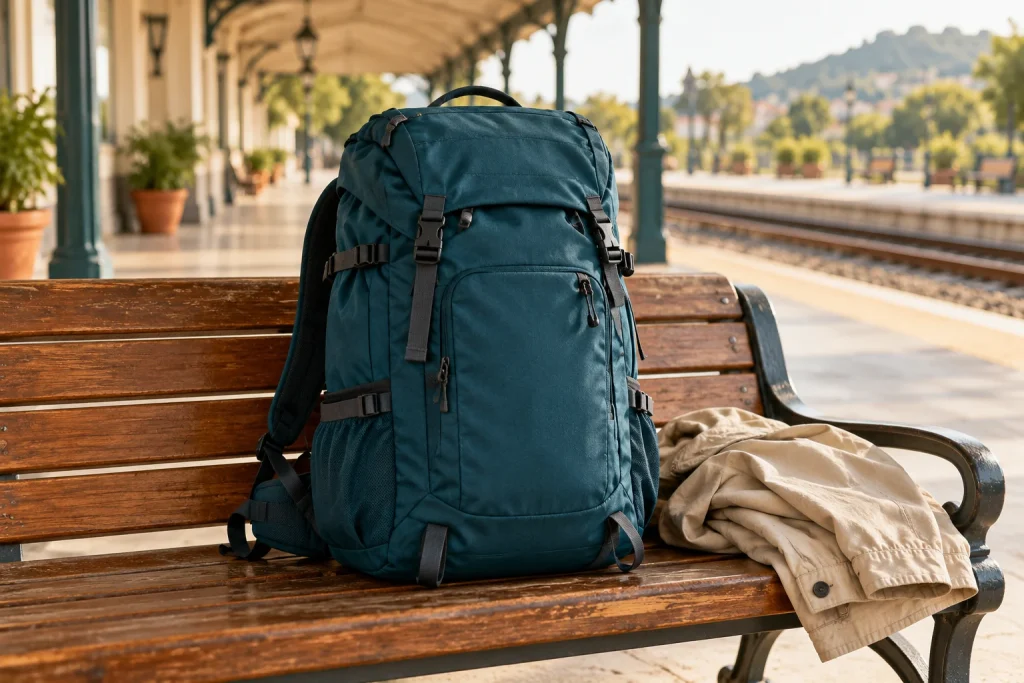
Start with the Patagonia Black Hole Mini MLC 30L if your short-trip packing list genuinely fits a smaller bag. Choose the Cotopaxi Allpa 35L when built-in compartment organization matters more. Choose the Osprey Farpoint 40 when you need a larger travel pack and want an adjustable torso system. These are research-based recommendations; a loaded fit check should decide which you keep.
The quick decision
| Scenario winner | Backpack | Why choose it | What you give up |
|---|---|---|---|
| Top pick for disciplined light packing | Patagonia Mini MLC 30L | Smaller stated capacity with several carry configurations | Less room for bulky shoes or clothing |
| Best for compartment-based packing | Cotopaxi Allpa 35L | Suitcase-style opening and divided interior | A deeper packed shape to check against airline limits |
| Best for a larger load and adjustable torso | Osprey Farpoint 40 | Adjustable torso, frame and stowable suspension | More bag than a minimal weekend needs |
We have not labeled one the cheapest or the most comfortable. Checkout prices vary, and comfort cannot be established from a specification sheet. Each choice earns its place by a different packing strategy.
Choose the load before the liters
Lay out clothing for one repeatable laundry cycle, then add the items you cannot easily replace or improvise: essential medication, work equipment and activity-specific gear. Decide whether an additional pair of shoes is necessary. These decisions often change the required bag more than clever folding does.
Pack that list into a bag you already own if possible. Note the awkward objects and access problems. Does the laptop need its own entrance? Do you want to open the bag flat at every accommodation, or reach a small item while standing? Choose a format that serves those actions.
Then check your ticket’s baggage allowance. These are travel backpacks, not universal personal-item recommendations. A soft bag becomes larger when overfilled, and hanging a jacket or water bottle outside changes how it moves through tight spaces. Our carry-on backpack buying framework explains that first screening in more detail.
1. Patagonia Black Hole Mini MLC 30L: our starting pick for a small kit
Patagonia’s model 49266 has a stated 30-liter capacity, stowable shoulder straps and a padded hip belt that can also serve as a shoulder strap. Its product listing gives dimensions of 20 by 12 by 7 inches and a weight of 1,290g. The official page also describes a separate tech-storage area.
We would start here for a short international trip with repeatable outfits and limited extra footwear. The smaller volume gives you a useful packing constraint: if a bulky optional item forces a larger bag, you have to decide whether that item is worth carrying through every transfer. That is an editorial reason to prefer this size, not evidence that it fits every airline seat.
- Pros: smaller stated footprint than the other two choices; stowable carry options; a dedicated area for electronics.
- Cons: limited capacity if you insist on separate outfits for every day; a convertible hip-belt strap does not establish the same fit as a dedicated backpacking harness.
- Best for: travelers with a compact packing list who want one bag for airport and accommodation transfers.
- Skip it if: your essential load already requires close to 40 liters or your laptop does not fit its compartment.
Try the different carry modes with your load before deciding they add value. A shoulder strap can be convenient for a short handover, but you may still prefer two shoulder straps for a longer walk. The useful configuration is the one you will actually use.
2. Cotopaxi Allpa 35L: best for keeping categories separate
The current Allpa 35L listing describes a suitcase-style opening, internal compartments, a laptop sleeve and tuckable straps. Cotopaxi publishes a size of 22 by 12 by 10 inches and a weight of 1.33kg for the linked standard version. Check the exact current model; older Allpa pages and Del Día variants can have different materials and weights.
This is our pick when you want the bag itself to provide much of the organization. Assign one area to clothing and another to smaller items, then judge whether the divisions match your packing list. That can be more straightforward than buying a bag and immediately adding a full set of organizers.
- Pros: divided packing layout; laptop storage; exterior bottle pocket on the current linked version.
- Cons: built-in subdivisions can be awkward for unusually bulky objects; published depth deserves careful checking for a restrictive ticket.
- Best for: travelers who unpack flat and prefer a clear place for each category.
- Skip it if: you want a largely open sack for equipment or need the smallest possible empty bag.
Do not assume every compartment must be full. A partially empty section is preferable to carrying unnecessary clothes for visual neatness. If you use cubes, choose them after measuring the available compartments; the bag’s total capacity does not tell you which rectangle will fit inside.
3. Osprey Farpoint 40: best for a larger packing list and fit adjustment
The present Farpoint 40 product page lists an adjustable torso, LightWire frame, padded hip belt and stowable suspension. Its published capacity is 40 liters, with a listed weight of 1.48kg. Osprey describes this as a men’s-fit travel pack. Use the current Farpoint specifications rather than carrying forward measurements from a previous generation.
The buying reason is the combination of larger volume and adjustable torso length. If a fixed harness places a hip belt in the wrong position on your body, extra compartments will not fix it. Adjustment provides something useful to evaluate during a fitting, although it cannot guarantee comfort for you.
- Pros: torso adjustment; frame and hip belt; suspension can be stowed for handling.
- Cons: larger capacity makes overpacking easy; extra structure has an empty-weight cost; the stated fit needs an individual check.
- Best for: travelers with a larger essential load who will assess harness fit carefully.
- Skip it if: you want an unobtrusive daily bag after arrival or already pack comfortably into a smaller option.
Start the fitting with the belt, not just tight shoulder straps. Ask a knowledgeable retailer to help if the manufacturer’s instructions are unclear. Walk with your actual load indoors for long enough to discover obvious pressure points, while keeping the bag within the seller’s return conditions.
How to avoid buying more bag than the trip needs
Write a short maximum-load rule before ordering: for example, one laptop, one pair of packed shoes, and clothing that you are willing to wash. Do not choose a larger backpack merely to avoid making the clothing decision. The larger option should solve a requirement, such as equipment that truly has to travel.
Budget for the complete system. You may need a compact day bag or a rain solution, but do not add accessories automatically. Water-resistant fabric does not make every opening or seam waterproof. If protecting electronics from rain is essential, choose a protective arrangement with a clearly stated purpose rather than assuming a fabric label covers the whole bag.
Keep security in proportion. Lockable zipper sliders can support a packing routine, but they do not turn a backpack into a safe. Carry critical documents deliberately and avoid exposing expensive equipment unnecessarily. See our anti-theft day-bag comparison if you want a smaller arrival bag.
Frequently asked questions
Is 30 liters enough for a week?
It can be if your own clothing and equipment fit, and you are willing to repeat outfits or do laundry. Trip length alone does not determine volume. Test the actual kit rather than copying someone else’s item count.
Should I buy the largest bag the airline permits?
Only if your essential load needs it. A larger maximum allowance is permission, not a packing target. Compare a compact load first, then move up if something necessary will not fit.
Can any of these replace a hiking pack?
This article selects them for travel packing. We have not assessed trail performance, heat management or all-day carrying. A trip built around substantial hiking deserves a separate equipment decision.
Do I need packing cubes?
Not necessarily. Start with the backpack’s own organization. Add one or two appropriate packing cubes only when they solve a retrieval or separation problem.
Sources and review notes
Official product information checked October 23, 2026: Patagonia Mini MLC 30L, Cotopaxi Allpa 35L, and Osprey Farpoint 40. Color and regional inventory can vary. Explore more decisions in the Travel Gear hub.